


























Telco video feeling its oats more than ever
more on the topic
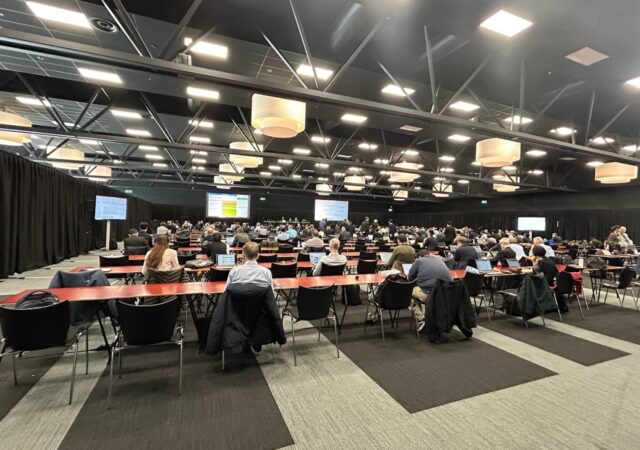
If October’s USTA Telecom 2004 conference turned up the awareness for video over IP, then the recent TelcoTV 2004 conference was very much about how the telco can accomplish it. This year’s TelcoTV was the best sign yet that the telecom industry has emerged from the doldrums. As the major carriers detail their fiber and video plans, evidence that life is flourishing in the industry is unmistakable. For many vendors, it’s almost like the old days, when people believed that ISDN meant “I Smell Dollars Now.” Except today’s ISDN is IP video. Most service providers I speak with these days have mixed feelings about how video and IP have drowned out traditional telephony, but that’s progress.
Further confirming the fact that telco video has “ crossed the chasm” from an early adopter’s solution to a mainstream business, the conference ran multiple session tracks. After pre-conference and morning sessions that emphasized how telco video--just like cable and satellite--is about consumers, there were separate afternoon tracks for telco video beginners, those experienced with telco video, content and marketing. For beginners, some of the experienced scoped out the lay of the video landscape, while the experienced track was for those who have launched their services and now need to address issues that didn’t seem as important when they were getting started, such as “Why can’t I license Showtime?” The marketing and content tracks were about video customer acquisition and loyalty--still not a familiar area for smaller telcos but clearly understood by the majors. After all, just in the past several months, both Verizon and SBC announced executive hires for those areas and many are coming from the cable industry.
From a technology perspective, TelcoTV 2004 was more evolutionary than revolutionary, but the field was definitely deeper. Legacy telco video vendors (is there already such a thing?) announced new product releases and some major customer deployments while lots of companies made themselves known to the telco audience for the first time. Reflecting the increasing focus on content protection, fully seven content protection companies showed their wares, in contrast to just one last time; again, some are cable suppliers testing the IPTV waters. In addition to the established middleware players selling in North America--Minerva, Myrio and Alcatel--two additional ones, Thales and InfoGate, were also at the show. Although it was physically absent at TelcoTV, the Microsoft IPTV team got a lot of visibility this week thanks to the $400 million commitment from SBC Communications.
CPE suppliers including Entone Technologies, i3 Micro and Thomson, all of which were in the process of introducing single-TV IP set-top boxes last year, launched IP residential gateways this year that support multiple TVs in the home. Some of the new boxes have options for PVR and DVD recording as well--underscoring the new revenue opportunities available to telcos. Other set-top box companies there for the first time included Amino Communications and Wegener. Four companies showed offerings that take advantage the coaxial cable put in by the cable or satellite company, to distribute TV within the subscribers’ home. Some were analog while others were pure IP.
This year’s TelcoTV saw more vendors from the cable world, as well. They sense big opportunities. Cable suppliers at the show included content protection vendor Nagravision and interactive applications supplier ICTV. Cable networker C-COR, which is in the process of buying nCUBE (whose video servers are found in a number of telco video deployments) was also there, as was cable VOD supplier SeaChange International. And of course Motorola, which will be supporting Verizon’s analog video efforts and which absorbed telco network supplier Next Level Communications last year, has its feet planted in both the cable and Telco worlds. Perhaps this is a sign that cable and Telco infrastructures will look more and more alike as we go forward; it’s “convergence” at the industry level.
The exhibitors and conference sessions weren’t the only things causing a buzz at the show. Some interesting content suppliers, alternative broadband service providers and new equipment companies that weren’t ready to peddle their wares from booths were cruising the IPTV waters on and off the show floor. Another good sign was the presence of investors. Except these investors were grown-ups looking for grown-ups, in contrast to the dot-com era when a demo on a laptop was worth millions from an irrationally exuberant twenty-something MBA graduate with a fat war chest.
Lastly, there was the social life. It may seem frivolous but it’s always a good sign when companies pony up a few marketing dollars to host parties (although whether parties are a good allocation of these dollars is another story). Back in the heyday of the computer industry’s Comdex (and earlier Supercomms as well), you weren’t cool unless you were triple-booked for after-hours parties. And the entertainment… wow! Comparatively speaking, of course, TelcoTV is a small show and Tower of Power didn’t play, but some vendors did host parties.
The next video opportunities for those who missed TelcoTV 2004 but can’t wait until the next installments of Supercomm or TelcoTV include the Consumer Electronics Show in January, and April’s National Association of Broadcasters (NAB) conference; both in Las Vegas.
Steve Hawley is principal consulting analyst of Advanced Media Strategies. He may be reached via his Web site, www.tvstrategies.com.
popular articles
Want to use this article? Click here for options!
© 2008 Penton Media Inc.


