


























Telephony LIVE

Know a service provider that is DEFINING INNOVATION?

Nominate a service provider today for the Telephony Innovation Awards, to be held at Telephony LIVE: The 2008 Telecom Summit!

Learn more or Nominate!

         Subscribe in NewsGator Online   Subscribe in Bloglines

Exclusive: Reed Hundt on the 700 MHz auction, P2P throttling

more on the topic

More Related Articles

Reed Hundt

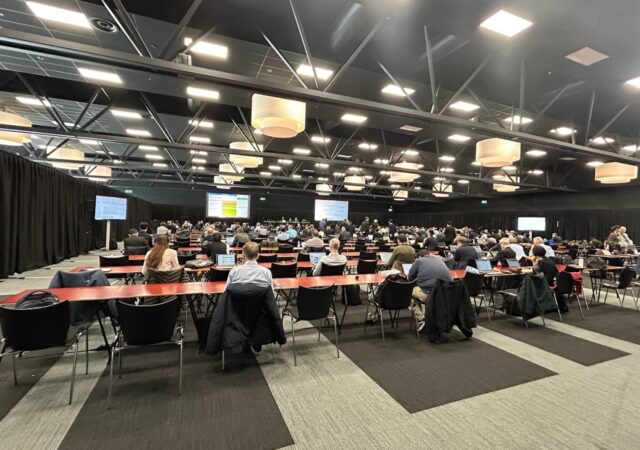
Former FCC Chairman Reed Hundt formed Frontline Wireless with plans to build a nationwide emergency communications network using spectrum auctioned off by the FCC. Among other things, Frontline has proposed that the FCC apply open access requirements to the spectrum. Reed spoke with Telephony in an exclusive interview at the OFC NFOEC optical trade show this week.

On a national emergency communications network: First the FCC has to declare the [700 MHz spectrum] auction to be over. Second we have to find out whether or not anybody bought the D block. I think we’ll know both these things—what’s today? Wednesday? I think we’ll know by Friday or Monday. Third the FCC has to announce who won the auction, and actually their rules say they won’t necessarily do that. They have to be realistic; they have to tell everybody. So the smoke has to clear. It’s an anonymous auction, so we don’t have any way to know if the FCC doesn’t announce it. Only when the smoke clears can we take a look at the situation. I can’t give you any information until the smoke clears because I don’t know how to analyze it.

On changing the Universal Service Fund: I think the FCC is paying attention to something minor while something major is going unaddressed. What’s major is the U.S. is the only developed country in the world without a broadband policy. We’ve not had a real broadband policy in eight years. The FCC and the White House have collaborated in trying to convince the media and the people that everything is peachy whereas global travelers all know that Japan and England and France and Germany are way ahead of the U.S. in terms of broadband. That wasn’t the way the 90s went. In the 90s, we led in the Internet and wireless and productivity gains and capital investment in communications. We don’t lead in the same way on any of these subjects anymore.

On how to change broadband policy: It’s important to decide that the primary broadband provider needs to be open. Second they can charge for the bits, but they need to be open about what they’re charging and absolutely clear about the contracts and about their performance. None of these things are true today. Most important, we need to get over the idea that having cable and telephone companies each do an okay job is somehow better than one firm doing a great job. If you have one broadband provider or a dominant broadband provider charging a tenth of what’s being charged today and providing ten times the throughput, there’s nothing wrong with that. That would be a decent broadband policy. So instead of saying let’s nickel and dime phone companies in rural America, I’d say let’s commit to openness and bury the lines and seal the conduit and string glass all across America. If the network is truly open and if the goal is to maximize the bandwidth and that’s what you have as your business and regulatory paradigm, then it’s not very important that you always pit cable against telephone. It’s more important that you have at least one universal provider. Going back to universal service, instead of seeing us reduce the amount of money we give to phone companies in Montana, I’d rather see us provide really high-speed access, even if it was just one company, provided they were open.

On municipal broadband: Those are consistent with what I’m saying. There just aren’t very many [muni broadband providers]. The reason [the muni broadband model] is not viable is because there’s not enough money in municipalities to pay for it. Period. End of story. And there never is going to be.

On P2P throttling:This issue of what Comcast and others are doing--that is just a reflection of the lack of a broadband policy. Everyone’s criticizing Comcast for throttling certain P2P communication, but what is it you want them to do? No one’s saying that. You have to start not by criticizing but by saying what you want them to do. The problem with Comcast, the problem with the telephone companies is that they’re not delivering 100 Mb/s. The problem is not that they’re throttling P2P. Here’s what we ought to say: We want 100 Mb/s. We want it to be at the world’s lowest price. We want you to tell us what the obstacles are. We’ll help you deal with them. If we had 100 Mb/s, we’re not going to talk about throttling because there will be plenty of bandwidth.

On the U.S. wireless market: [The U.S.] is the last market in the world that people choose to bring a new wireless product to. Not second or third--the absolute last. Right now the policy of the FCC has been to encourage AT&T and Verizon to become the twin Bells that dominate the wireless business. They’re allowed to buy all the spectrum they can find. The antitrust laws are waived and ignored every time they appear to be a problem. The FCC is the only spectrum auction entity in the world that does not carve out spectrum for new entrants. They do it in Mexico, Canada, the U.K., China and Japan. Only here does the new entrant not get much of a chance. This is the only country in the world where the rule is the big guys can buy all of it. When you consolidate service providers, just like in the old days, when there was not two Bells like today but one, everybody knows what happens. It’s very hard for innovators to get into the market, in terms of content or software or hardware.

On telecom warrantless wiretapping immunity: I don’t understand why the president doesn’t just pardon [the telecom carriers] the way he did Scooter Libby and forget about Congress. I think what’s really going on is the people in the government don’t want to admit what happened. I don’t know what happened. Somebody must know. It’s not me, and it’s not the people in Congress. We only know we’re told that whatever it was, it might have been illegal so they need to be immunized. You can see why that makes people suspicious, right? I can’t think of a case where a person or an individual was immunized as to liability without anyone ever knowing what it was that they did. Even Scooter Libby, we knew what he did. He was tried and convicted and then he was pardoned. [Shrugs.]

Get Updates Via Email

related resources

popular articles

Want to use this article? Click here for options!
© 2008 Penton Media Inc.

White Papers

WHITE PAPER

Network Evolution to SIP-based Networks: Migration Strategies for Success

This paper explores the benefits of optical control plane functionality for service providers. You’ll learn the benefits of Ciena's CoreDirector, the first intelligent optical switch. DOWNLOAD NOW

Podcasts

PODCAST

A NXTcomm08 Podcast: George Dobrowski, Broadband Forum

George Dobrowski, chairman and president of the Broadband Forum, speaks with Associate News Editor Sarah Reedy about the broadband industry and its relevant themes at NXTComm08. LISTEN

Blogs

BLOG

What happened at NXTcomm08

Recuperating from the big show, here are some reflections on some of the more prominent themes amid activity at the show... READ

E-Books

E-BOOK

READ E-BOOK: MANAGING THE CUSTOMER EXPERIENCE

This e-book explains how to keep your customers happy, reduce churn and strengthen profits. Sponsored by CA’s Wily Technology Division. READ NOW!

Events

FEATURED EVENT

NXTcomm08: News from the show as only Telephony can deliver!

The editors of Telephony have all the news from NXTcomm08, including keynote recaps, podcasts, video interviews and much more! Visit nxtcommnews.com.

TV

TV

Interview with Jim Hansen of Embarq at NXTcomm08

Tune in to Telephony TV to watch an interview with Embarq's Jim Hansen at NXTcomm08. WATCH IT NOW.

  • Telephony Content
  • Telephony Content

current issue

Current Issue

June 30, 2008

Telecom's top execs had lots to say at NXTcomm08 -- our editors covered every word. Read Now

Telephony Innovation Awards

The second annual Telephony Innovation Awards recognize service providers who have developed unique or first-to-market offerings that either utilize technology or address customers’ needs in a new way. Nominate a service provider for this distinctive award!
Learn more or
Nominate

NXTcomm08 Show Daily News

Get up-to-the-minute news from NXTcomm08 -- before, during and after the show! Hear interview podcasts, announcements, commentary and more. Visit www.nxtcommnews.com!

more news

Global >>

MORE

Ethernet >>

MORE

Independent >>

MORE

IPTV >>

MORE

IMS >>

MORE

WiMax >>

MORE

VOIP >>

MORE

FTTX >>

MORE

Access >>

MORE

Broadband >>

MORE

Wireless >>

MORE

Software >>

MORE

Podcasts >>

MORE

Get Updates Via Email

Browse Issues

  • June 30, 2008
  • Jun 16, 2008
  • May 19, 2008
  • May 5, 2008
  • Apr 28, 2008
  • Apr 14, 2008
  • Mar 31, 2008