


























Exclusive New Research from the Telecom Leader

Survey stats * market share * real world deployments * and more

Now with two ways to buy…

      Subscribe in NewsGator Online   Subscribe in Bloglines   
   Comments

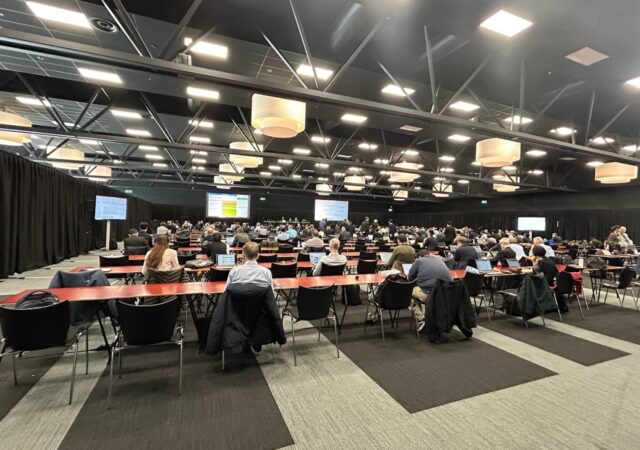
TELECOMNEXT: Net neutrality a bogus debate

more on the topic

More Related Articles

LAS VEGAS--The heated debate in Washington over Internet neutrality actually boils down to a few companies seeking government help to compete against telecom and cable companies’ video programming by delivering movies over the Internet, AT&T’s top lobbyist said Wednesday.

“This is about streaming movies,” Jim Cicconi, AT&T’s senior executive vice president for external and legislative affairs told a TelecomNext press conference. “At its core, Net neutrality is about a handful of companies who plan to stream movies on the Internet, to compete with us and with cable companies, and they want us to guarantee they will have the same quality of service for their streaming movies that we provide for our video services over our own private network.”

The only way to guarantee that level of quality, according to Cicconi and Tom Tauke, Verizon’s executive vice president for public affairs, policy and communication, is to use a private IP service, which the service provider can control and manage, and for which it would expect to be paid. There is no way for a broadband service provider to guarantee the quality of any traffic that traverses the public Internet, with its best-effort routing, Cicconi said.

“The only way we can [guarantee quality] is by offering them a service which they would have to purchase,” Cicconi said. “They have plans, some announced and some planning to announce, to offer movies over the Internet, and they want to make sure their product is as good as ours or that ours is dumbed down to their level.”

Cicconi’s comments came at the end of a news conference at which he and Tauke had laid out, in careful terms, their companies’ support for delivering public Internet to consumers as they do today, without blocking or degrading any service.

The Net neutrality argument, they said, is based on widespread misinformation and confusion over the difference between the public Internet and private IP-based services such as Virtual Private Networks. Both companies are providing their own IPTV services over private IP networks, in order to provide the quality, reliability and security of service they need in order to compete with cable and satellite, the two men said.

“It’s hard to figure out what problem they are trying to solve,” Tauke said. “It’s also hard to find consensus among advocates as to what they want.”

One such advocate, David Burstein of DSLPrime, attended the press conference and insisted at its close that Cicconi and Tauke had just “given in to Net neutrality” with their statements Wednesday.

“This is where we’ve been all along,” Tauke responded.

There are “not enough investment dollars available” today to fund the addition to public Internet bandwidth that would be required to deliver QoS on that network equal to a privately managed IP service, Cicconi said. He said he had spoken with many net neutrality proponents and found their goals for legislation seemed tightly tied into the business case of the company they represent.

“If someone wants an equivalent service to what we provide ourselves, then that’s what they want--a dedicated line service,” he said. “When a transmission touches the public Internet, we can’t use prioritization of traffic because it won’t do any good--you can’t improve the quality of the packets.”

The two Washington insiders said they believe telecom service providers are winning the net neutrality debate in Washington by continuing to educate lawmakers about the issues, and the dangers of inviting government regulation of the Internet.

Tauke said telecom players are also winning friends and influencing lawmakers on the prospects of a national video franchise, which would speed their entry into video services by eliminating the need for individual local franchises. While time for such a bill is tight, he said, all indications are that Congress is favorably disposed to the notion that national franchise legislation could speed competition in the video market, which would benefit consumers.

Want to use this article? Click here for options!
© 2009 Penton Media Inc.

  • Telephony Content


blog comments powered by Disqus
Get Updates Via Email
  • Telephony Content

related resources

popular articles

Webcasts

WEBCAST

Reduce Customer Churn and Cut Costs Webcast | July 22, 2009

Learn the best practices for online customer billing and service – how to implement a paperless bill, drive traffic to your web site, improve customer service.

REGISTER NOW

White Papers

WHITE PAPER

Automated End-to-End Managed Service Delivery. Sponsored by Ciena.

Ciena’s industry-leading CoreDirector Multiservice Optical Switch with FastMesh® has been used for efficient and robust core switching in the world’s largest networks. DOWNLOAD NOW

Podcasts

PODCAST

Wikimedia explores the phone as encyclopedia

Kul Wadhwa, head of business development, Wikimedia Foundation, discusses with senior editor Kevin Fitchard the Wikipedia’s future on the mobile phone. LISTEN

Blogs

BLOG

I-feature: Readers respond

As promised, a key component of Telephony’s new Interactive Featureis reader participation READ

E-Books

Telephony May Special Section: Carrier Ethernet

No slowdown in sight!

Read how carrier Ethernet is defying the slow economy. DOWNLOAD NOW!

  • Telephony Content
  • Telephony Content

commentary

Carol Wilson
Energy bill should energize change

June 29, 2009

Read Now

Carol Wilson
Steve Hilton
Ask Steve

June 29, 2009

Read Now

Steve Hilton

Recent Comments

Follow comments on Telephony

More ways to stay informed

Find us on Facebook

follow us on twitter

Browse Issues

  • June 1, 2009
  • October 1, 2008
  • April 1, 2009
  • March 1, 2009
  • February 1, 2009
  • January 1, 2009
  • December 1, 2008