

























NXTcomm: Sprint 4G chief lays out new business model for WiMAX
more on the topic
Listening to his keynote address at the FierceMarkets WiMAX Strategies conference, Sprint President of 4G Barry West hardly sounded like an executive with a major wireless carrier. Touting Sprint’s new WiMAX network, he called for an end to handset subsidies, and talked about driving down ARPU for data services and making the new mobile broadband network as inexpensive for the consumer as possible. He even suggested his own cellphone may be over-engineered, carrying extraneous features like an MP3 player and digital camera--not statements you’d expect from a veteran of the cellular industry.
West has become WiMAX’s chief evangelist of late, but in that new role he hasn’t just promoted the benefits of the technology but stressed the need to turn the wireless business model on its head. Today at the Fierce conference at NXTcomm, he laid out specifics on Sprint’s business model for WiMAX, but by not-too-subtle inference he was telling the entire telecom industry the model they must adopt for WiMAX to be successful.
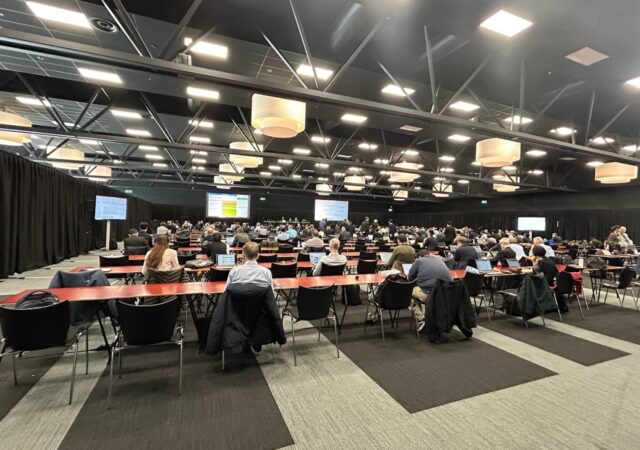
“This is not another voice network,” West said to the crowded room. “This network is about mobilizing the Internet. That’s probably the most important statement that I will make today.”
But West went on to make many other statements, many of them at odds with the traditional way carriers have done business for two decades. His fundamental premise was that WiMAX isn’t inherently a technology with a superior cost-per-bit advantage, but rather one with a superior cost-per-dollar-of-capital spent. WiMAX’s wide swathes of spectrum allow carriers to deploy the ten times the capacity over the same infrastructure, he said. If launching over 1.25 MHz channels, 5 MHz channels, you must still use the same base station, tower and support facilities. By launching over a 20 MHz channel, WiMAX efficiency comes in the sheer volume of capacity that can be achieved over the same physical infrastructure, West said.
That cost efficiency is only part of the equation, though, West said. Carriers have to find a way to further drive down costs for the end-user, he said—they have to take cheap capacity and make it even cheaper. The most important step: don’t subsidize devices.
“In order to keep costs down, you can’t subsidize the device,” West said. “Subsidized devices are why we have walled gardens. They’re why operators have to have contracts.”
The types of consumer devices Mobile WiMAX will support—laptops, portable media players, digital cameras—will be attractive enough to consumers without carriers kicking in to pay for them. Once consumers buy their electronics they’ll seek out the network in order to utilize the full-functionality of their new purchases, but if carriers start locking them to high-priced contracts or limiting what services they use or how they access the network—which is how cellular carriers traditionally recover their subsidy costs—then customers will flee, West said. The open Internet model has to be enforced on the WiMAX network, he said, otherwise it will simply fail.
Carriers will still have some flexibility in the type of access they offer, West added. They can use WiMAX’s QoS features to offer limited throughput to lower-spending customers and completely open pipes to higher-paying customers. For instance, Sprint can sell a data plan that allows a user to connect all of his or her WiMAX-enabled devices at any time and in any fashion but throttle back the maximum level of throughput those devices can use at any given time.
Answering a question about the iPhone, West singled Apple’s new handset as both the wave of the future but limited by the outdated business model Sprint is trying to overturn. West said he believes the iPhone will be a big success as Apple excels at creating iconic easy-to-use devices. The problem is that the plethora of applications and data services on the iPhone call out for mobile broadband connectivity, which the iPhone’s EDGE and Wi-Fi radios can’t provide. “It’s sort of missing a critical piece, in my opinion,” he said.popular articles
Want to use this article? Click here for options!
© 2008 Penton Media Inc.


